Showing posts with label drama. Show all posts

Monday, March 12, 2018

A Wild West allegory/fantasy

Unbury Carol

Josh Malerman


Del Rey

April 10, 2018

5 stars


Anyone who reads my review knows that I am heads over heels in love with the novels of Josh Malerman. You must believe me when I say I am not being paid to say that. He is that good. His first novel was Bird Box which is the type of horror novel veteran writers would give their non-dominant arm for. The second novel, Mad Black Wheel, is just as good. Now we have his third novel, Unbury Carol and, for reasons to be related soon, it is the most unusual of the three and the most exciting in many ways.

Carol Evers has a very rare condition. She can elapse into a coma at any time which can persist from 2 days to a week. it is so deep that even doctors mistake it for death. The only people alive who know about the condition is her ex-lover outlaw James Moxie and her husband Dwight Evers. When Carol falls into her coma this time, Dwight is prepared to tell all that Carol is dead. He intends to bury her alive in what he sees as the perfect murder. it is up to James to ride to her rescue, a task that will not be made easy since an arson loving hit man is also on his trail.

Unbury Carol is a departure for the author in several ways. Like his last two books, it has clear aspects of horror especially in the segments that depicts Carol's dream-like coma and some vague supernatural aspects. What is perceived as magic and what isn't is a regular theme in the book. But it also threads finely between horror, western, and suspense. The world depicted in the novel is very much that of a Wild West environment and the era of the late 19th century. Yet it isn't really stated as such. The region is essentially a closed system independent of any known references, consisting of two main towns, Carol's Harrows and James' Mackatoon, connected by a route simply known as the Trail. The rest of the towns on the Trail are little more than watering holes and traps of temptations for the traveler. There is a Pilgrim's Progress sense of allegory here. James Moxie is a lost soul haunted by his decision to leave Carol due to her illness. The Trail is his pilgrimage to save Carol and redeem himself. James find both villains and allies on this path but it is Smoke, one of the most evil bad guys I've read about in ages, that dominates the horror of the chase. While James races to get to Carol in time her husband, who is pretty despicable in his own way, attempts to fulfill his "perfect murder" plot despite a mortician and a lawman who senses something isn't right.

On top of all this, we also get an account of Carol's residence in her coma which she calls Howltown. These are the most horrific segments in the novel and probably the segments that will scare most people. Being caught in a coma is terrifying enough but to know you have full conscience and helplessly waiting to wake up six feet under is the stuff most people would rather not think about. Carol's Howltown though, has its own dreads to pile on top of Carol's very real fear of premature burial.

Under a less skillful writer, and presuming it was written as a straight Western genre novel, it still would have been an intriguing idea. But there is something about Malerman's setting and how he employs it that sends it into pure wonder. The author's Wild West world is a fantasy world of his own. There is no real life references to where it is or even to the actual time frame. Most of the action in the novel could be explained by our real world environment but there are hints and actions that tip us off to that not being the case. This hedging of realities gives this novel an uniqueness that I believe most writers would have trouble pulling off. Malerman doesn't just pull it off but shoots it with all barrels out of the park. The other great strength of the book is its characters. The four main character, being Carol, Dwight, James, and Smoke are also incredibly strong and three dimensional. But even the more minor players such as Sheriff Opal, The mortician Manders and an especially hyper but marginally moral Rinaldo becomes essential in this impossible to put down fable.

I use "allegory" and "fable" intentionally for this is what really stays with me. It's about correcting past mistakes and redeeming ones' self and the consequences of ignoring both. It is based on a vaguely familiar world but filled with the type of actions similar to those we have made, regretted and wish to amend. it is also filled with those less admirable character who made evil decisions and are unable or unwilling to recognize them or correct them. Unbury Carol works on so many levels it's almost ridiculous. it can be scary as hell, It is a story of love and redemption, and it is a vastly entertaining western action saga. And this is where those "reasons to be related soon" comes into account. Where Bird Box and Mad Black Wheel were superb horror novels by a creative writer, Unbury Carol shows that he can be unlimited in where his imagination takes him and he can turn what would be a good but conventional idea into something that aggressively gnaws at your imagination.. The idea of Josh Malerman let loose in the literature world is most exhilarating and pleasantly terrifying by itself.

Monday, February 26, 2018

A terrifying take on the Donner Party

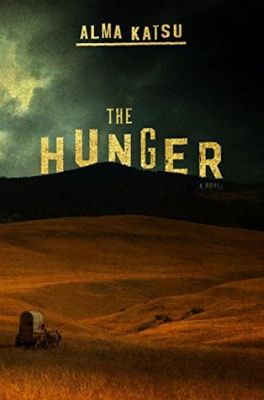
The Hunger

Alma Katsu


G.P. Putnam's Sons 

March 6, 2018

4 & 1/2 stars


For those who never opened their American history textbook in school, The Donner Party was a group of families, a total of about 90 individuals, who were traveling by horse and wagons to California in the years of 1846 and 1847. After a series of misfortune and tragedies, they became trapped in the Sierra Nevada mountains in the winter. Only 45 survived to make it to Sutter Fort. The stories that came from the survivors were those of vast misfortune, fatal decisions and accusations of cannibalism.

Alma Katsu's fictional account of the Donner Party misfortunes comes with another imaginative addition, that of the supernatural. The Hunger is a highly successful mixture of the historical novel and the horror tale. The author for the most part uses the name of the actual persons in the party, adds a few other historical personages like the trapper and scout Jim Bridger, and adds just a few fictional characters. Even though several characters figure in the main narration, the main protagonist is James Stanton, a single man on the trip who has secrets of his own. In a sweeping narration like this it often becomes difficult to keep track of all the characters. I found myself, after a few pages, perusing over the actual history of the Donner Party just to get a better idea of the events. I found that Katsu's account, with a major and obvious exception, was fairly loyal to it. That exception is "The Hunger".

The Hunger is both an historical novel and a fantasy. I imagine this is a difficult thing to do. Katsu uses some back stories to give us an view of the various persons that figure in the telling and to be honest, I do not know how much of their back stories was real, especially for James Reed, Tamsen Donner, and Charles Stanton. These three characters figure strongly in the events to come. The author manages to do an impressive job telling the story in an historical sense but deftly adds a sense of terror as she introduces an element of horror into it. Another historical element that is important is that the Donner Party's misfortunes starts a long time before they reach the Sierra Nevada. The novel begins in Wyoming slightly before they reach Fort Bridger and the tragic events that befall the pioneers starts pretty much at that point both historically and in this fiction.

This is where this review gets tricky. The Donner Story is horrific enough without adding a supernatural element. Much of the novel is based on the complex interactions of the members of the party. Stanton's tenuous relations with the Donners is much at play here as well as his troubled past. James Reed's falling out with the travelers plays a role yet I suspect the reason it does is partly fictional . At some point, the reader must put aside Katsu's deft handling of the historical aspects and realize this is a horror novel. That horror is added subtly while the author immerses the reader into the interactions and tribulations of the party members. Yet that horror finally takes hold of us. This is where Katsu shines. From the beginning I expected the horror to be of a much more traditional nature and I do believe the author intentionally leads us that way. Yet Katsu has her own tricks and we get something different than what we expect. It is a neat trick and one that fits keenly into the characters that we have become involved with.

Throughout the novel, the author plays with our sense of wonder and curiosity. She gives us enough historical background to feel rooted while keeping us informed now and then that we are essentially reading a horror novel. She adds a creative something to an incident that was already pretty horrific. Most interesting to me is that, despite the creative addition of her own imagination, we do get a strong sense of the difficulties that the Donner Party went through and what their own frailties added to their bleak tale. It is sometimes hard to separate the real and the imagined in this novel and I believe that is the strength. We could always read an historical account if we want to know what exactly happened to the Donner Party. But it is a story that even in its historical reality confounds the imagination and makes one wonder how something like this could happen in spite of the many warnings the Donner Party received on the way.. Katsu teases it with a tale of horror that relies on a combination of folk legend and our own human nature and makes it just a little more terrifying and therefore entertaining to the reader that dares to stretch the imagination. There were a few times where the imbalance between historical and fantasy stretches a bit but overall The Hunger becomes a riveting tale of human nature and the fear of the unknown.

Wednesday, October 11, 2017

An exploration of gender and acceptance

Nails

M. P. Johnson


Publisher: Lazy Fascist press

Pub. Date: September 17, 2017

Rating: 5 out of 5 stars


Some books you read because they give you an view to the human spirit that you may just not have had access to in any other way. Nails is that type of book. It is one of those books that, despite its sadness, actually celebrate our individuality in a world where some forms of celebrations are frowned upon. persecuted or even expressly forbidden. In Nails, our protagonist takes a weekend vacation to Los Angeles , far from anyone she knows, so she can be herself. Danielle, the pseudonym she takes for her weekend escape, is a man who only feels comfortable as a woman and dressed in women's clothes. But even then, she is aware and self-conscious how she is viewed and of the hazards that might befall her when out in public.

Danielle is obsessed with her nails. The acrylic, long, glorious, impractical kind. They become a symbol of her life and needs, a small allowance of the coming out she is not able to thoroughly do at this time. Many of her fears are real and as she chronicles her weekend she expresses and illustrate those fears. But there is always a want for acceptance and where she goes for that acceptance in the final pages may both shock and enlighten some of the readers. It becomes a moment of tearful sadness but also a small bit of hope.

Nails is presented as fiction but if it is, it is very likely autobiographical fiction, at the very least in the emotions and longings presented by the author if not the actual events. Beautiful and revealing writing like this can not stream from just the imagination. It takes a skillful acknowledged writer to present it and that is exactly what M. P. Johnson is and does. There is a scene in the middle of this too short work where she is at The House of Blues attending a show by The Damned when a young man comes up to her. It is a moment of mixed emotions for Danielle who is not sure whether the boy is simply fooled or accepting her for what she is. His advances are subtly and ultimately refused. Whatever possibilities existed disappears due to the power of that fear and doubt this book is so much about. For me, it was the most powerful moment in the book.

Books like this do not come around often. M. P. Johnson is known mostly for her bizarro fantasy novels but this is straight down to earth reality. It speaks not only of the want for other's acceptance but one's own acceptance of what they are and the reality that gender is not as necessarily defined as we think it is. Nails is way too short. M. P. Johnson clearly has much more to say and I believe she has a autobiographical novel or even a non-fiction work in her that will amaze us even more. Until then we have this brief revelation of a novella and it is one that I would deem essential reading for 2017.

Friday, September 29, 2017

Small revelations

Mud Season

Justin Grimbol


Publisher: Atlatl Press

Pub Date: June 15, 2017

Rating: 4 out of 5 stars


I remember reading another novel by Justin Grimbol a few years ago. i remember being impressed by his mastery of words and his deceptively casual style of writing. I also remember not being bowled over by the plot or lack of plot. The book came across as aimless and more than a little a little mundane. Perhaps I couldn't get into a character with no goals and equally goalless friends. So now i sit here having read his new book Mud Season and wondering whether in the past three years did the author mature or did I? I'm going to bet on the fact that perhaps the author, or at least his character, did since I am 66 and probably am not going to mature much more in the years I have left even if I haven't matured all that much anyways. In fact I am placing a moratorium on maturing. No more maturing!

Actually, to be a little more serious, It might be the theme . Mud Season is a novel about a year of marriage. Justin Grimbol's perennial character is named Grimboli. which pretty much says all you need to know about whether there might be a autobiographical tendency. Our perennial character Grimboli has certainly matured. He is now married. Reality has changed for him. Life is an endless cornucopia of experiences and surprises. Mud Season is a series of short chapters, rarely over a page or two and many just one paragraph, that chronicles the narrator and his wife's transition through the seasons of the year. If you are looking for a solid plot, look elsewhere. That is not the author's style. But if you are looking for an examination of life and emotions that exist in our own mundane world then you are in a gold mine. It is those in-the-moment observations that work here. Grimboli's random thoughts become connected in this work in a way that was missing in his previous book and it leads to small revelations for the reader. Grimboli's smind is all over the place but always right there with you leading to paragraphs like this...
Thank heaven for jokes. I love jokes so much. They are better than prayers, really. Better than church, often. Jokes and laughter. Jesus should have turned water into jokes. Not wine.
The characters laugh a lot in this book, especially Grimboli's wife. It is not that the laughter that is communicated so well but rather the narrator's appreciation of it. This is a book about interactions whether it is with his wife or the neighborhood children who annoy him. Our reward is to eavesdrop on his life and enjoy this different perspective.

Mud Season is a fast and easy read. I can see some readers wondering what the point is. However sensation by sensation it comes together. It is mystifying, spontaneous, but overall entertaining. Which leads me to the question, "IS there a point?". This time I think there is and our narrator may have hit upon it...

Grimboli, we are still stuck," He said

"Good point," I said. "But I'm sure we will get out eventually."

"I hope so," He said.

Tuesday, August 1, 2017

A mother and son drama

Fierce Kingdom

Gin Phillips


Publisher: Viking

Pub Date: July 25, 2017

Rating: 3 out of 5 stars


Joan and her four year old son are enjoying the last few minutes at the zoo before it closes. But on the way out, Joan hears gun fire and sees some very disturbing things near the exit. She does not know exactly what is happening but she knows people are dying. She and her son run for their lives and hide in an abandoned animal enclosure. For the next three hours, she will be fighting for her life and the life of her son. She will be making some difficult choices.

There is a lot of emotion in Fierce Kingdom which, related to the plot and theme, is one of the best titles this year. It is predominantly about what a mother would do for her child. Gin Phillips has her heart in this book. She writes about a situation which no one would want to be in. We learn much about Joan as she make tough decision and interacts with two other women who find themselves struggling to stay alive. While the situation is harrowing , it really isn't a psychological thriller as much as a psychological drama. The heart of this book is in the relationship between a mother and a young boy.

The problem with what transpired is that the author has chosen a suspenseful situation that calls for tense moments and smart well-timed decisions. This is where the novel falls down. It gets off to a good start yet bogs down in the middle as we get a lot of thoughts from the mother on what is happening but nothing much really happens. Finally, we get glimpses of the terrorists but when they show up they are neither realistic or interesting. Plus, there are just too many strange decisions that may serve to drive the tension but fail because they don't make sense. One example: Joan is worried the light of her cell phone will attract the killers. I kept thinking," then turn it off and wait until they are gone to use it." What does she do,? She tosses it away. It may haveincreases the sense of isolation but doesn't help to make the situation believable.

But at the end the plot is helped along when Joan meet two other women who are hiding. This picks up the level of tension and has a beautiful moment when one of the women recognizes the gunman. It is a nice turn and I wish there were more like it.

Overall, Fierce Kingdom is full of beautiful writing. Gin Phillips is certainly a writer worth noticing. But perhaps thriller related books are not her forte. Literary drama is and if this was solely a drama before family and taking risks, it might have been more fruitful. Read this for the emotional drama and you will be pleased, If you are reading for the suspenseful plot, perhaps maybe not. I do recommend it though for that wonderful writing and for its emotional pull.

Friday, June 16, 2017

A new start yet far away...

The Space Between the Stars

Anne Corlett


Publisher: Berkley

Pub. Date: June 13, 2017

Rating: 3 & 1/2 out of 5 stars


Anne Corlett's The Space Between the Stars is full of some beautiful writing. The challenge is figuring out what type of beautiful writing it is.

Jamie is one of the very few people left alive after a space-wide pandemic. She may be the only person alive in her space colony of ten thousand people and she has no idea if anyone else has survived. Earth in the past has been over-populated and the colonies were mainly populated by those who were compelled to resettle. Jamie was one of the few who volunteered, wanting to leave an unfulfilling relationship and looking for her own "space". Now her only thought is to return to Earth and hope against hope the man she left is still alive.

As it turns out, there are other survivors and they make a plan to return to earth. The small crew makes up a microcosm of reasons for returning. There are also others who do not want the survivors to return to Earth for their own reasons ranging from the political to social to personal. The trip to earth and what they find is pretty much the vehicle for the novel but the meat of the plot is found in the motives and expectation of Jamie and the others on the journey.

This all make for a rather introverted space journey. there are several discussions of a philosophical nature on whether expectations of a future are futile or not and basically about what the heck they are doing anyways.. Jamie gets a surprise that causes her to rethink her reasons for going back to earth then strengthens and re-frames them. Jamie is a big "if" in this novel. She embodies a will and purpose yet some may think that purpose as rather selfish and naive. She wavers between selfish and wise and I believe that is how the author wants her to be seen. There are no real heroes and villains here just a group of people struggling physically and psychologically in a Homeric journey through space.

And like most Homeric journeys, the author is portraying and exploring a few existential struggles in life along with it. But perhaps the venue is a bit wrong. Or maybe it's the marketing. The Space Between the Stars isn't really that much of either a science fiction novel or post-apocalyptic one although it is hyped as both in the promotional spin. Science fiction fans are bound to be disappointed in the simplicity of the idea and a distinct lack of world-building. Those who would like the literary drama of the story, which I feel is its strength, will be off put by the space adventure aspects. Essentially the epidemic and the colony aspects is a McGuffin and in that, some readers may feel a bit cheated. To add on to that, The other characters do not really flesh out all that well feeling like bit players in a B-science fiction movie when you want Ibsen.

It's unfortunate since Corlett has a story to tell here and the climatic ending brings much of it together emotionally . If The Space Between the Stars finds its audience they should be quite pleased with it. I'm just not sure who that is.

Wednesday, June 7, 2017

Murakami's best short fiction collection to date

Men Without Women: Stories

Haruki Murakami


Publisher: Alfred A. Knopf

Pub Date: May 9, 2017

Rating: 5 out of 5 stars


To begin this review, I would like to feature a quote from one of Haruki Murakami's earlier novels, South of the Border, West of the Sun...
"Rain falls and the flowers bloom. No rain, they wither up. Bugs are eaten by the lizards, lizards are eaten by the birds. But in the end, every one of them dies. They die and dry up. One generation dies and the next one takes over. That's how it goes. Lots of different ways to live. And lots of different ways to die But in the end that doesn't make a bit of difference. All that remains in a desert."

Life is basically a desert, Murakami muses. But Murakami sees oases occasionally springing up that gives us some meaning if to only ourselves. Sometimes they are mirages but even mirages leaves memories. I believe he sees that hint of meaning mainly in relationships, especially the relationship between man and woman.

In Men without Women: Stories, Murakami's superlative thematic short fiction collection, we are introduced to men who are alone for different reasons in their lives. Some unintentionally and some by design. Some are divorced and some are widowed, and some never really found that oasis. Even when they do, it may be fraught with mystery and pitfalls. Each tale features a man who is either telling his story, or relating one of another, and ruminating over the haunting encounter,. These are tales that may seem simplistic but derives meaning from their relation to our own lives and struggle. Each of the seven pieces of fiction are excellent examples of storytelling and psychological drama of the most subtle kind. With the exception of one, maybe two, there is none of the author's magical realism and their points may fly by the reader only to be caught after the reading is well contemplated.

"Drive My Car" is about an actor who hired a female driver to transport him around the city. His wife has passed away and it first appears like the plot will focus on the man's relationship with his driver. But that soon changes as he tells his driver about his wife, her affairs and his attempt to discover why she had affairs when he maneuvers a friendship with one of her ex-lovers. It is a good example how Murakami can make strong emotions and regrets almost conversationally reflective.

In "Yesterday", Kitaru suggests that his friend Tanimura go out with his girl friend. It is Kitaru's strange solution to his concern that Tanimura has not had a girlfriend in a long time. Again, what would go off in one way for the conventional writer ends up in a study of Kitaru rather than the bewildered and slightly hapless Tanimura. The end reflects a common ploy in much of Murakami's works in that the resolution of the story comes with a reunion of the characters many years in the future when distances reveals meaning.

"An independent Organ" is another tale where the main narrator is telling the story of a Dr. Tokai, one of those individuals whose relationship with women is constructed in affairs and brief encounters. Tokai is a bit of a suave scoundrel who finally falls in love with tragic consequences. It is the most beautiful tale of the collection in my opinion.

"Scheherazade" is about a man who cannot go outside for reasons that are not made clear. He is given a "helper" who becomes his lover and tells him stories after their lovemaking. In typical Murakami style, her stories become sort of a confession that give insight to both the teller and the listener.

Is "Kino" magical realism? I'm not really sure. This story about a man who opens a bar and gets a odd regular is rather mysterious. The woman/man connection is very vague here mostly referring to how Kino finds a purpose after the end of his marriage. It is also the only story in which a cat plays a role. This may be a strange thing to say if you haven't read much Murakami. The Murakami fans will know what I am talking about.

"Samsa in Love" is a play on Kafka as an insect wakes up and find himself transformed into Gregor Samsa. The transformation seems rather pointless to the new Samsa. Then he meets a woman...

the collection ends with the title story. It is fitting it is the last tale as it brings the rest together. A man receives a call from another man to tell him a former girl friend from years before died. Then he abruptly hangs up. Our narrator has not seen this woman, she was not married at the time of their friendship, and he never knew the man who called. It turns into a reminiscence about chance encounter and wraps up the tragedy of having little control over those who have the most meaning for us...

"It's quite easy to become Men Without Women. You love a woman deeply, and then she goes off somewhere.That's all it takes. Most of the time (as I'm sure you are well aware) it's crafty sailors who take them away. They sweet-talk them into going with them, then carry them away to Marseilles or the Ivory Coast. And there's hardly anything we can do about it. Or else the women have nothing to do with sailors, and take their own lives. And there's very little we can do about that too. Not even the sailors can do a thing"


Men Without Women may be Murakami's best short fiction collection to date. It reads quickly but is deceptive in how much is going on within these well crafted tales. Even though I find his novels to be the real meat of his writings, I do not hesitate to recommend this collection as one's first journey into Murakami's world. it's that good.

Saturday, January 14, 2017

Hotels and Owls

The Nightly Disease

By Max Booth III


Publisher: Darkfuse

Pub Date: December 18, 2016

Rating: 5 out of 5 stars


 It is said one should write about what they know. Max Booth definitely knows something about night auditing in a hotel. Much of what is in The Nightly Disease comes from his experiences working that very job; hopefully not the actual events but from the strange and cynical atmosphere that night duty brings. Having worked a series of night shifts in a series of strange jobs in my much younger years, I can vouch that the midnight hours brings out a different and not always complimentary side of human nature. But so far none of my nighttime jobs ever involved, at least directly, owls. Only my daytime ones.

The Nightly Disease centers around a hotel night auditor by the name of Isaac. In first person narrative, he gets right down to telling us about what a lousy job he has. His only real only friend is George the night auditor at the hotel next door. Asides from George, the only other thing he looks forward to each night is the bulimic homeless girl who comes into the hotel to purge. There is one other interesting girl he meets, a new night auditor who biggest dream is to pet an owl. So it is a bad sign when she ends up dead, killed by an owl that attacks her.

Owls figure heavily in Booth's noirish yet weird novel. What their role actually is may be argued even after you finished the last page. They give the book a fantastic feel but are more of a omen (appropriately if you know your Native American folklore) than the main event. Isaac's nightly encounters are both mundane and surreal at the same time. It is a bit like Bukowski's nihilism meets Tom Robbins' mirth. Booth could have made the questionable decision to write a wandering narrative steeped in the negativity of lost hotel characters but instead he wisely chooses to add a main event that gives the plot a focus and Isaac a challenge. Isaac doesn't see it that way but views it as an exclamation point to his drudge of a life and it's inescapable dead end. But in a typical noir move there is a girl that may be his ticket to a meaningful life. Yes, it is the bulimic one. Even hotel night auditors have dreams and sometimes you have to take them where they drop.

While Booth is usually associated with writings of the surreal and bizarre, this particular book reads fairly straight. That does not mean it isn't strange, just the type of strange that makes sense in an alienating world. In fact, of the things I've read by the author, this is probably the most mainstream . (Gasp!) It is, as expected, beautifully written with dialogue and descriptions that grabs your jugular. It is a darkly comedic story which smacks head first into existential angst and comes out the other side with a least a little hope for the human race, not to mention one hotel night auditor. Max Booth III is one of those authors to look out for and The Nightly Disease is the first substantial and thoughtful fiction of the new year.


Sunday, October 23, 2016

A coming-of-age novel for the middle age?

We Did Everything Wrong

By C.V. Hunt


Publisher: Atlatl Press

Pub date: November 15, 2016

Rating: 4 out of 5 stars


I ended up identifying with the protagonist of We Did Everything Wrong more than was comfortable. He is 65. I am 65. He is a widower and I am a widower,. He is a widower by only 9 months compared to my 3 years but I certainly understood his ennui as he grieves. He has a weird friend that nobody likes and so do I. He hates Walmart and...

But that is where the similarities stop. Abraham Koyfman is bitter and depressed and, while the death of his wife has much to do with it, that is not really the reason. He is unhappy where his life has taken him, disappointed with the results, and sees no hope. He is still in mourning but it is unlikely anything will pull him out of it for a long time if ever. All he has is a fruitless job selling subliminal self-help tapes which barely augments his income. He is on the verge of suicide when his rude and drunk friend Horace and his annoying girl friend drops in for a surprise visit. Horace convinces him to go to a meeting of the self-help tape company salesmen and tell his employer face-to-face he is through. What follows is the world most existentially depressing road trip.

C.V. Hunt never goes for the sunlight and this is no different. But she still manages to find meaning in the dark. While Hunt is mostly known for Bizarro, horror and psychological horror,
there is none of that here. The closest it comes to horror is a existential horror reminiscent of Sartre and Becket without the absurdism. The author describes the novel as "A coming-of-age story for the middle age". That may have scared me the most to consider 65 as middle age in this era of elongated lifetimes. Abraham is discovering that his "mid-life crisis" still has 30 years to go when he originally thought he would be on the downside and experiencing it with his lifetime partner. Can it get more devastatingly real than that? Perhaps it will be too real for most people. No escapism, no violence but plenty of pondering the meaning of life. For some people, that can be the most nihilistic thing they can do and that is what Abraham may be learning from his plight and from his friend.

We Did Everything Wrong is a bit of step forward for the author. Like another author she is very familiar with, Hunt is wandering away from horror and Bizarro and tackling big life problems in a way that confronts and maybe terrifies. This is an easily read book due to the author's substantial skills in storytelling but it may not be an easy book to digest. And that is what makes it worthwhile, maybe even important, to read.

Wednesday, July 20, 2016

An American tale that isn't pretty but beautiful

The Heavenly Table

By Donald Ray Pollock


Publisher: Doubleday

Pub.Date: July 12, 2016

Rating: 5 out of 5 stars


 Southern Gothic is alive and well and generously dosed with a bit of Hillbilly Crime Noir and Redneck Existentialism in The Heavenly Table by Donald Ray Pollock. This is his third book and with it, he has pretty much cemented his status as the 21th century’s answer to William Faulkner, Flannery O’Connor and Cormac McCarthy all rolled into one. In his first two books, He introduced us to the town of Knockemstiff, Ohio and in this one, he turns Meade, Ohio of 1917 into a tableau of down-and-outs, barely surviving farmers and townsmen, and the outcasts beyond and between the law.

In The Heavenly Table we are introduced to the Jewett Family, Pearle and his three sons named Kane, Cob, and Chimney, who barely make a living sharecropping and often surviving on anything they can scrounge off the land. Pearle tells his boys they suffer now so they can eat off the heavenly table after death. Yet when their father passes away, they decide to emulate their fictional Pulp Western book Hero Bloody Bill Bucket and take to robbing banks. With the reluctant acceptance of slow-in-the-mind Cob, they are willing to sacrifice the heavenly table for more earthly comforts even if it means violence and bloodshed. Their exploits take them from Alabama and on the way to Canada until everyone meets up in Meade, Ohio.

By “everyone”, I mean a slew of characters ranging from a farmer and his wife who loses their savings, a gay soldier who hopes to meet his death in glory in the battlefields of World War II, an outhouse inspector cursed with a large piece of biological equipment, a black out of jail bum who is easily used and abused by pretty much everyone, and a bartender with a gruesome secret. While the Jewett brothers are the focal point of the novel, Pollock weaves all these tales together to form a world of his own with a desperation all its own.

Pollock’s world view may seem a bit rough. There is a lot of violence and a lot of cold-blooded and mean behavior but it is tempered with the author’s uniquely dark humor that acknowledged a good human nature trying to dig its way out. There is just enough tenderness in the hard lives of these characters to keep you interested and involved. There may be a lot of cruelty but few of them are evil. Most of them are surviving in the only way they know how. That is why I found this novel to be so incredible. The insightful prose never stops. There are many eloquent passages about the nature of man and society…

“As blind as he was to most of his defects, even Powys knew that the first thing a man lost when he entered politics was his humanity.”


One of the few comparisons to Pollock’s Ohio tableau in literature may be Faulkner’s fictional Yoknapatawpha County, although Pollock’s Meade and, the earlier used Knockemstiff are actual Ohio locations. Both literary landscapes take a slice of America and populate it with characters that sing off the pages. Yet Pollack has the cynicism of Flannery O’Connor and the sparse realism of Cormac McCarthy to spice up his form of storytelling. And storytelling is exactly what the author is doing by weaving a variety of stories to make an exquisite whole.

Donald Ray Pollock, for my money, is the most exciting American author actively writing. He has solidified his own unique style with three books. Any of the three are well worth reading but The Heavenly Table is the most complex and original of the three. If this doesn’t make the top five novels on any reviewers list this year then something is not right with the world.

Wednesday, July 6, 2016

Reality TV vs the apocalypse

The Last One

By Alexandra Oliva


Publisher: Ballantine Books 

Pub. Date: July 12, 2016

Rating: 2 & 1/2 out of 5 stars


I must admit I have never been a fan of reality TV shows, mainly because they are as far from reality as humans can get without calling it a fantasy. I did get into Survivor for the first three seasons until I realize I could pick out what was scripted and predict every move. And I still regard the very entertaining but phony Pawn Stars as one of my guilty pleasures. That was only one reason I was looking forward to The Last One by Alexandra Oliva which, for most of the hype, appeared to be using the setting of a fictional reality show as a microcosm for human society and for examining the media's manufactured blend of reality and fiction.

In The Last One 12 people are appearing in a new reality show that is a cross between Survivor and The Great Race. It is a different type of reality show in that the participants compete in a "race" where, unknown to them, there is no finish line. They continue until one is left standing and their only way out is to surrender before the end is by saying the words, Ad Tenebrus Dedi. The contestant nicknamed Zoo is on a solo challenge and strays off. She comes across signs of devastation which she thinks is part of the game. Little does she know that the world is experiencing an event of apocalyptic proportions.

The idea is inspired and, at first, the implementation is brilliant. it starts with a prologue that shows the series being structured and gives us a hint of the global disaster to come. After that we get alternating chapters with different perspectives. One is in the first narrative of Zoo as she wanders thinking she is still in the game. The other is third person in which we follow all the contestants as it leads from the beginning to the end. We get a feel for the contestants who are known by their nicknames: Zoo, Rancher, Waitress, Engineer Girl, Black Doctor...yes that last one seems a little off. They resemble not only the stereotypes you see in reality shows but a microcosm of civilization. We learn their real names gradually. Some readers seem to have trouble pairing them with the nicknames but I did not find that an issue. Add to this, the author's clear mastery of her writing style. It is unarguably well written and it carried the story to the finish line.

Yet by the end of the first half of the novel, the brilliance seems to slip away. Zoo is still thinking she is in the game even when everything screams, "No!". The appearance of an young man stretches it to the point of absurdity when she thinks he is the cameraman. We are led to believe that Zoo is very smart yet that assumption is quickly going out the window due to the need to continue this hard to believe scenario. Back at the game, I am wondering what the payoff is, and I mean the payoff for the reader not the participants. With our cast of stereotyped characters and their related actions, I started to wonder if we are seeing an attempt at a Lord of the Flies/Animal Farm styled analogy yet that doesn't really work either. In a way this is a beautiful example of the need for expectation, execution, and finish in a novel. The expectation is beautifully set up. The execution is good at the beginning yet doesn't follow through. And the finish is a whimper.

I wish I could recommend this. Oliva certainly has a home-run novel in her. But this one makes it to third base and get tagged. I do seem in the minority though. . Being the author's first novel, it bodes well for things to come. But all in all, and considering the great start, it ends up a disappointment. I still recommend it over most reality TV shows though.

Saturday, April 23, 2016

Dungeons and Draggin'

Hobgoblin

By John Coyne

Publisher: Dover Publication

Pub. Date: November 15, 2015 (reprint)

Rating: 1 out of 5 stars

A little historical perspective is needed to review Hobgoblin properly. Hobgoblin, which was written by established horror and supernatural writer John Coyne, was first published in 1981 as was a similar novel titled Mazes and Monsters by Rona Jaffe. What both novels have in common is that they were about the rising interest in fantasy role playing games like Dungeons & Dragons. The other thing they had in common was a concern that these games may be harmful for troubled or neurotic teens who became obsessed with them. Mazes and Monsters was the more commercially successful of the two books, being loosely based on a true incident and becoming a popular TV movie. Whether you agree or disagree with the premise that fantasy role playing games can be harmful, it did an adequate job in presenting its case.

Then we have Hobgoblin. Here is the same idea: A neurotic but intelligent teenager is appearing to blur the line between fantasy and reality. But John Coyne takes a different tactic. His premise is purely fictional. His main protagonist is Scott Gardiner, a teenager who is obsessed with a role playing game called Hobgoblin which is based on Irish legends. His character is Brian Boru, a high level fighter who never gets killed. Then one night Scott’s character finally meets his match…at the very same time Scott’s father dies of a heart attack. Scott and his mother moves to a medieval styled castle, on the banks of the Hudson River no less, where she works as an archivist. Scott continues to play the game alone when things begin to happen around the castle that makes him question how much is real and how much is imagined.

Does the woods around the castle hold legendary creatures or is Scott not so slowly losing his grip on reality? That is the question the author is teasing in this messy and badly structured novel. Eventually the real question becomes; do we care? For Scott is not very likeable. He is immature, selfish and basically a brat. We are supposed to feel sorry for him due to the loss of his father but there is no foundation set to feel that loss. There is also a problem of an endless amount of coincidences and unbelievable circumstances. The idea of Scott’s character and his father dying as the exact same time is far-fetched enough. Yet Coyne builds one unbelievable circumstance upon another with no real warning as if hoping the reader doesn’t notice he has gone into the silly zone. The reader can’t help but notice.

Finally, and for me the most unforgivable issue, the entire book is a cheat. It suggest and promises some kind of tie-in with role-playing and Scott’s real or imagined events. Instead of combining the two, we get a jumbled mess that never really brings them together intelligently. The made-up game itself doesn’t really fit any realistic structure of any role-playing game I’ve ever experienced. Even worst, Coyne milks the possible supernatural elements to the point that there is no real pay-off once we get to the Scooby-Doo ending. It is trite. It is predictable. It is disappointing, especially since we have a character that doesn’t really seem to grow up in any sense.

At least, Jaffe’s Mazes and Monsters addressed a real issue. Are the new role-playing games harmful to some of our more vulnerable teens? Coyne acts like he wants to address this too yet chooses to stay on the fence by making it some kind of horror/suspense tale at the same time. In trying to play both sides, he fails. Hobgoblin will likely disappoint most readers because it tries to be both and ends up being nothing.

Tuesday, March 15, 2016

My Dinner with Rush

Killing Limbaugh

By Sean R. Shealy


Publisher: CreateSpace Independent Publishing Platform 

Pub Date: August 27, 2012

Rating: 3 out of 5 stars


Marcus Gray is a history professor at Oregon State. He has a wife and child and is pretty much living the American dream until he writes an article criticizing military action in South America. The anger of Right Wing America descends on him led mostly by the rhetoric of Rush Limbaugh. A lunatic, fueled by the hateful rhetoric from radio talk show hosts burns down Marcus' house which eventually leads to the death of both his wife and infant son. Gray is consumed with anger and depression. He eventually comes to one conclusion. He must go to Limbaugh's West Palm Beach Compound in Florida and kill him.

If one is familiar with Sean Shealy, it is probably due to his clever Facebook/YouTube rants and his prank called BundyFest where he half convinced many that there would be a huge rock concert on the property of notorious rancher Cliven Bundy. His humor is absurdist yet it has a serious undertone that reveals his deep concern in what is happening to this country. Killing Limbaugh continues that trait in a story that is part moral allegory and part socio-political dialogue. Shealy's novel happens in a hypothetical America circa 2012 when a conservative president has been elected and the right wing talk show pundits are declaring victory. The background to how Republican President Rust is elected shows Shealy at his most absurd but frankly it becomes a distraction since the author will soon be referencing from real history. It makes the chronology a little messy for the reader. Marcus takes a detour in his travel to complete his fatal mission and ends up in a alternative city called Kabul situated next to a very conservative and religious town called Krohn. This is where we start the moral allegory. I couldn't help thinking of the movie Billy Jack where all the good guys are noble and all the bad guys are repulsive. There is little subtlety here . But it also sets up the tension for the coming stand-off between the ideologies.

And this is where it gets interesting. Marcus eventually gets to West Palm Beach. He breaks into Limbaugh's studio and holds him at gunpoint. While still broadcasting, they begin a dialogue about what has gone wrong in America. Soon millions are listening and reacting to the responses. Marcus begins to put forth what he sees as the deceptions and lies spread through conservative talk radio. He goes through where he think America went wrong and the perceived evils that talk show pundits like Limbaugh and Glenn Beck can do. He explains the problem with their political jargon that demonizes ideas like socialism and he explains how our history is actually many ideologies that work together for the individual rather than corporations. And he tells how, in our contemporary society, that has been turned around.

This is not a neutral or even fair and balanced dialogue. Actually it is often a monologue. Shealy, like his fictional counterpart Marcus, is angry and it shows. But it is an intelligent anger that references much of our history and politics to illustrate what is happening in our own time. Near the end, it reverts back to Shealy's hypothetical universe with climatic action that, in my opinion, is just too strange to bring it together. Yet it is that dialogue with a reluctant Limbaugh that makes this book interesting. Even if I feel the setup and the end tends to be weak it does reinforce the dialogue with an entertaining gimmick that propels us through the meat of the matter.

An interesting thing here is that the author is doing to Limbaugh what Limbaugh has done to our country. When Limbaugh came to media popularity and power, it was after the demise of the Fairness Doctrine which forced the media to provide both sides of an argument. That simple and logical request disappeared and it enabled some, like Limbaugh and later Beck, to monopolize their shows with one opinion and cater to only those who shared that opinion. They created a media and a listener who thrived on only one side of the coin and became unable to flip that coin over. In Killing Limbaugh , Shealy through Marcus turns that very method against the talk show pundit. With Limbaugh as a hostage, Marcus become his own one sided advocate. When show's listeners hear the other side it becomes a revelation. Does Marcus eventually kill Limbaugh? You have to read the book to find that out but we know how the author wants to kill Limbaugh and his cohorts. He wants to kill him with words and this book is his weapon.

Killing Limbaugh has some serious issues. Being an independently published book, it has its share of typos and is in dire need of a professional editor. I found much of the action far too artificial to be believable and felt it would have worked better if he left out what could be called a dystopic plot and kept it in our real world. Yet overall, I found the meat of the book in the dialog and the ideas, which are both intelligently and emotionally laid out, to be entertaining and insightful. It should be obvious that most conservative readers will have issues with the book. I found myself agreeing with most of Shealy's accounts of history and politics yet not all of them. But there is a lot in this book that needs to be said and the author should be commended for doing it in such an unusual way. Finally, if one is disturbed by the title which suggest killing a person that actually exists, please remember that celebrities are often more idea than man and the way to kill the idea is by presenting the truth.


Thursday, March 10, 2016

A familiar dread

Squirm With Me

By Andersen Prunty


Publisher: Atlatl Press

Pub Date: March 19, 2016

Rating: 5 out of 5 stars


With Squirm With Me Andersen Prunty has taken a big step away from the Bizarro label he endures and maybe even from the horror classification that dark books like The Sorrow King and Fuckness has given him. His new novel has nothing bizarrely impossible about it nor is there anything that makes you go "eww" or "eek!". Yet the author is still obsessed in a nihilistic universe with characters designed to make the reader do what the title promises. Squirm With Me may be his most mature and personal novel yet. It also may be his best.

Mason Becker is a writer who self-published his first and only book and is doing well enough to quit his job and live on the royalties with help from his cashed in 401(K). Yet both are finally wearing out He recently experienced the death of his girlfriend and is questioning his worsening relationship with his daughter from his first wife. Now three people are coming into, and in one case back into, his life; A woman he meets in a bar, his brother Doug and a "hate reader" named Dargonslayer who is trolling him with stalker type messages and perhaps more devious tricks. Doug convinces Mason to go to a fantasy convention to seek revenge and "punch him in the dick". But before they leave for the convention, Mason is wondering why his brother has shown up at this time, a person he seems to hold contempt for yet follows his lead as though he is seeking his approval. This leads to a series of events that only heightens the sense that everything is going wrong in his life.

Squirm With Me is bleak. It tends to wander excessively in some places. There seems to be a pointlessness in Doug's action like he has forsaken his will to thrive even before his brother re-enters his life. Even sex with the new girl he meets is awkward and meaningless. Yet , in walking in a park, he comes across a trail that never seems to end. it becomes a mystery and a wonder. It is something different than the meaninglessness and disappointment he is finding in his life. It feels magical. The scenes of him exploring this trail is a respite for him. It appears to give him a queer source of hope.

Why would this bleak novel feel so real to the reader? Maybe it is because for me, in the character of Doug, the author seems to have created a reasonable if scary version of my own brother. A person who has a strange source of charisma with others but is toxic in our own interactions. Is this coincidence? I think not, since we all have our unhealthy issues in our family and do not have to dig that deep to find them. Is there an obsession to fail in our main character Mason? Have we not all been afraid of success and occasionally sabotaged ourselves? Feelgood novels may be essential and motivating for some but it takes a serious and talented writer to evoke our darker nature and make it feel real enough to be both uncomfortable, revealing and insightful. I think Prunty does that. He does it with a haunting style that is easy to read yet doesn't spell it all out for you. Prunty has shown several literary influences in his past works but this and his last novel, Sociopaths in Love, seems to owe much to the dark nihilism so loved by Chuck Palahniuk. Yet the style is all different and Prunty seems to hit more of a familiar and emotional tone for this reader. Whatever literary influence leaps out at you, Prunty is unique.

But can this novel be considered autobiographical in any way? That isn't really for the reader to decide even if the titling of the fictional author's work bears a teasing resemblance to one of Prunty's own novel and is just as full of dread and existential angst as this one.. Yet Squirm with Me works because, if the scenario is unfamiliar, the emotions and fears are not. Squirm With Me. may indeed be a horror novel but it is a horror novel we have all experienced in one way or another.


Friday, November 13, 2015

Strange topic, worthy message

Animal Suicide

By Alexandro Chen


Publisher: Amazon Digital Services, Inc. 

Pub. Date: November 1, 2015

Rating: 4 out of 5 stars


What a strange and lovely book Animal Suicide is. With a title destined to chase away a few people, Animal Suicide turns how to be a bitterweet tale about the meaning of life and the frailty of relationships. Li-Mei is going to commit suicide but decides not to after her mother calls to say her Chihuahua died. He was found hanging from his chain in a tree. With no motive or suspects, Li-Mei determines that the dog killed himself and discovers that suicides among animals are not unheard of. The topic of animal suicide becomes an obsession for her and, as you can figure, doesn't really do much for her social life. That is until she meets two other people interested in the topic and joins the Animal Self-Destruction Observation Club to explore her obsession.

The author Alexandro Chen uses this slightly uncomfortable topic to craft an odd but humorous tale that is not really about animal suicide as much as figuring how what life is about and why life become so meaningless to some people as to contemplate ending it. Each of the three people have a reason for being interested in this strange topic. Li-Mei is not really sure why she is suicidal. She has a good if dull and isolated life. The novel is presented through her first-person narration. What starts out as a strange tale of obsession with death becomes an equally strange but comforting romance. During the club's field trip we are given little hints about what the hell everything is about but what kept me going was Li-Mei's own development as she finds a connection with De-Shi, the boy who started the club. What develops and how it ends gives this somewhat simple story its heart and soul.

This short novel is one of those quirky but brief tales that stay with you. The somewhat neurotic approach to relationships and romance gives it a Haruki Murakami edge while the very dry humor that creeps up in the most unpredictable times reminds me of Vonnegut. What it also have in common is an on-the-fence nihilism which is eventually overcomed by an humanistic light. Animal Suicide may not provide anyone answers to the meaning of life but it may shed some light on why people like Li-Mei keep on going despite confusion and chaos. Animal Suicide turned out to be a pleasant surprise in the massive outpouring of publications this year. Hopefully enough people will pick up this book and get the word out. Alexandro Chen is not only a gifted writer but one who is willing to try to make sense out of the insanity called life. Whether he will succeed in that endeavor is highly doubtful but that just means he is as human as we are.

Saturday, September 5, 2015

A short but emotional masterpiece

The Sunken Cathedral

By John F. D. Taff


Publisher: Grey Matter Press

Pub. Date: August 4, 2015

Rating: 5 out of 5 stars


Jacob Reilly is 12 years old and the youngest of five boys. His short life has been one of hand-me-downs and that of having no real standout talent or feature. He feels disconnected to his family, his school and community and has no real friends. His only solace is in the church. He feels accepted, and in some ways special, in his position as an altar boy at the St. Stanislaus Catholic Church. He is particularly fond of one priest, Father Matt, who seems to prefer Jacob as his altar boy and has developed an interest in him.

In The Sunken Cathedral, John F. D. Taff has taken a disturbing and all too common situation and turned it into a heart-wrenching coming-of-age tale. Perhaps it is more of a "disruption of age" story since it is about broken trust and the destruction of identity. The entire story is in the first person narrative of Jacob and that is a major reason it becomes riveting yet sometimes difficult to read as we share Jacob's own confusion and loss. Taff has a brilliant ability to get into the emotions of the main character and to dig deep into his psyche. For a fairly short novella of 90 pages, it is incredible how much emotional exploration the author fits into it. It is a dark piece of fiction yet not without a glimmer of light as we come to the end of the tunnel. Taff's style is alternately realistic and poetic. He touches on uncomfortable themes and scenes with just the right amount of tension, giving us Jacob's insight slowly and realistically. His focus on Jacob and his direct experiences and emotions gives the story the right amount of pathos without ever crossing into the sensational or histrionic.

The Sunken Cathedral may be hard for some to read despite the author's flowing and accessible style. However, it is the type of story that needs to be read. It can be useful for those who have experienced this kind of tragedy or for those to get some insight on the confusion and hurt that accompanies the victims. But it is also great storytelling. Highly recommended.

Wednesday, July 1, 2015

An Epic tale of justice and revenge.

Paradise Sky

By Joe R. Lansdale


Publisher: Mulholland Books

Pub. Date: June 16, 2015

Rating: 5 out of 5 stars


Joe R. Lansdale has shown throughout his illustrious career to be an accomplished writer in many genres. Longtime admirers like myself know him primarily in the horror and thriller genres in which he wrote extensively when I discovered him in the 80s. But even then he wrote a few westerns, most noticeably The Magic Wagon and the before-its-time zombie Western, Dead in the West. Lately though, he seems to be focusing on Westerns again. His last novel, The Thicket, was a True Grit style tale of Western revenge and justice. It is also one of his best. But Lansdale has upped the ante, so to speak, with his newest novel, Paradise Sky. This new book carries similar themes yet goes beyond them and becomes a true epic of the West.

Paradise Sky is a very fictional account of an actual historical figure: a black cowboy and sharpshooter named Nat Love who was later nicknamed Deadwood Dick after winning a shooting contest in Deadwood City. In Lansdale's meticulous storytelling style, Nat was originally named Willie and was forced on the run in the Post Civil War South for glancing at a white woman's posterior. As Nat puts it, "I will admit to a bit of true curiosity as to how that backside of hers was far more attractive than the front, but I wasn't about no mischief of any kind." The enraged husband murders Willie's father and vows to hunt him down. Willie takes refuge with a man by the name of William Loving who teaches him to ride and to shoot among other helpful things. But soon Willie is forced to go on the run again and takes on the name of Nat Love as he journeys into the West.

Paradise Sky is full of daring deeds and momentous discoveries and it is best for the reader to discover them on his own. It is sufficient to say that the pursuit for Nat Love never stops and our hero is eventually forced to face his pursuers in a act of justice and revenge. If the author wrote a simple revenge tale it still would have been memorable. However, Paradise Sky is a tableau of Western mythology with legends like Wild Bill Hickok and Bass Reeves being peppered in to provide color and authenticity. But Nat Love is the focus of the story and it is his struggles against injustice and the ever prevailing aura of racism that makes this book so alive. Lansdale has always had a keen sense of American history and the prevalence of racial conflicts in America, That is certainly true here. Couple that with his endless gift for incredibly witty and real sounding dialog and it makes for a invigorating read that entertains but doesn't sugarcoat our history.

Lansdale often writes about his East Texas surroundings and, because of that, some might call him a regionalist. Yet it is books like Paradise Sky that belies that idea. Taking place in a range from Texas to South Dakota and over a span of years, Paradise Sky is a true American Western epic of a novel written by one that can merge the romanticism of the West with a socially honest and sometimes brutal realism. Whether writing about present day East Texas, the Depression, or the 19th century frontier, Lansdale manages to not only tell us a riveting story but confronts us with truths about our own interactions and the way we treat others.

Thursday, May 14, 2015

A novel of suspense and identity.


Mutt

By Shane McKenzie


Publisher: Rothco Press

Pub. Date: May 4, 2015

Rating; 5 out of 5 stars


In Shane McKenzie's tense and different novella Mutt, Patrick, a young white/Korean male who is often mistaken as Mexican, lives with his mother, works at a boxing gym cleaning up, and basically stays out of trouble. That is until he meets a Mexican girl who mistakes him as being the same as her. Pat is too smitten with desire to correct her and finds himself taken to a party by the local gang Los Reyes Locos. When he discovers he has been "drafted" into joining, it is too late and he is neck deep in a lifestyle he doesn't want with a girl he cannot resist. Soon, he must fight his way out to save himself and his family.

McKenzie's writing is very visceral. As in his previous work, Muerte Con Carne, there is plenty of action and violence. Yet while Muertes Con Carne is clearly a horror tale, Mutt is closer to a suspense and crime tale and throws in a lot of human drama into its characters' development and emotions. Patrick is mixed race but is frequently mistaken as Mexican. Patrick is based on the author's own situation and speaks of his own dilemma as being judged as someone he is not. While the author is taking his queues from his own life, I am fairly certain the actual plot is not auto-biographical or at least I hope not! The fictional Patrick's situation is extreme but it works as an illustration of one of our own inescapable issues in our American life; being judged on appearance and race rather than for who we really are. Mutt is just as much a coming-of-age tale about growing up in race and class torn America as it is an edge of your seat thriller about gangs and violence.

That is why this book and the main character of Patrick moved me so much. Patrick is a normal kid who wants to be accepted and wants the girl. He is tricked into a lifestyle he does not want for a girl who may have other plans for him. In the midst of this plot we have great writing that brings Patrick and the gang of Los Reyes Locos to life. There is no sugar coating. Shane is sleeping with cobras and he knows it. The scenes of violence are intense but fits squarely into the story and we see Patrick's own terror and bewilderment as he experiences it.

It is that part of McKenzie's writing that senses the horror of life choices when it collides with the human-created horrors of society that makes me come back to his stories. Whether it is cannibal families as in Muerte Con Carne or homicidal gangs as in Mutt, the author goes deeper than the suspense and visceral thrills inherent in the tale and digs into the existential dread that one will find themselves in. I hope the author continues this exploration of the human side of dark social and racial themes in future stories. Even if he decides to just thrill and terrorize us I will be pleased. He does it so well. But he has the gift of social observation that does not ignore the individual psyche and I hope he uses it again.

Saturday, February 14, 2015

A look at life, celebrity, and mortality

The Wonders

By Paddy O'Reilly


Publisher: Washington Square Press 

Pub. Date: February 10, 2015

Rating: 5 out of 5 stars.


The Wonders is about a "freak show". But then again, it isn't. While the traditional freak show offered human abnormalities of nature, the three protagonists that make up the touring attraction in Paddy O'Reilly's sensitive and thoughtful novel became what they are later in their life and through three different medical circumstances. Kathryn is cured of Huntington by a unique treatment that leaves her covered in black wool. Christos is a performance artist who has wings transplanted into his back. Leon has an artificial heart that resembles clockwork and is visible through a transparent window in his chest. Rhona Burke, an entrepreneur who has had success with various circuses and side shows bring them together for a 21th century celebration of oddities.

Paddy O'Reilly is an Australian writer who has a light touch and a subtle wisdom. Her style is easy going even though her themes in this book can be on the heavy side. She explores a number of topics including the role of the celebrity, our perceptions of what it means to be human (and humane), and our obsession with our own mortality. Most of the book is through the perspective of Leon. After multiple heart attacks and heart transplant rejections, he receives an unique artificial heart. He is naturally a quiet and somewhat isolated man who is given the chance to live out his life and to be able to risk his emotions again. Kathryn goes through life as a victim with her words and wit as her only weapon and sees her new role as performer as a way to become independent and to fulfill her wish to live alone on an island. Christos is the only one who chose his uniqueness, becomes defined by it, and strives for control over everything and others. It is Rhona who runs the show, so to speak, and she strives to balance both her no nonsense business sense with her sincere concern for the three singular individuals she brings together. She tries to prepare them for their celebrity knowing t will change them and will introduce them to other aspects of human nature that one may not want to see.

The real wonder is how this novel breezes through some heavy topics and still manages to tackles them with ease. I am reminded by her style of John Irving, especially of The World According to Garp which tackles some of the same themes. The Wonders is a bit of a wonder itself as we become involved with the three main characters as they deal with their inflictions and the notoriety it brings them. One ongoing theme is how they perceive their own humanness versus how the spectators view it with their own baggage and interpretation. How does one remain true to himself when even the most trusted person admits to the exploitation that comes with the territory?

There is lots to explore in this book but what makes it so good is that you can simply read it for the pleasure. It is both amusing and sensitive while examining important parts of the character's lives . Eventually there is danger and possibly even tragedy with hard choices for our protagonists but it is packed so well into the book that we become surprised at the turn.

The book was a surprise to me. I have not heard of the author before this and didn't know what to expect. In a lot of ways it comes across as a bit of existentialism without the heaviness and the cynicism. It is a positive existential novel which makes it a bit of a find and a bit of a contradiction. It is not a prefect novel . There are interactions between the characters that never really take off. For instance, Leon's romance with his doctor seems forced and there is never any real passion in it. Also, there is an ongoing situation with Leon and the maker of his mechanical heart that starts as a strong plot point, is dropped, then comes back at the end. I brings with it an important turn of event at the climax but it also felt a bit manipulative. Yet taken as a whole, the novel is magical and begs for a second reading for parts that you know are there but may have missed in all that literary magic going on. The Wonders is the first really great novel I have read in 2015 and it may be hard for the rest of the contenders to surpass. We will see.

Monday, October 6, 2014

Simmering psychological horror

Wakening the Crow

By Stephen Gregory


Publisher: Solaris 

Pub. date: November 11, 2014

Rating: 4 out of 5 stars


Stephen Gregory’s Wakening the Crow invokes not only the spirit of Edgar Allen Poe but also some of the psychological and supernatural aspects of the master’s writings that has had readers mesmerized since the 19th century . In Gregory’s haunting and puzzling novel, Oliver Gooch is a marginally working librarian until his 7 year old daughter Chloe is in a car accident. She suffers brain damage and Oliver is only slightly uncomfortable that he prefers this version of Chloe, mute and pliable, to pre-accident Chloe who he describes as “a horrid child” and “rude, petulant, and defiantly uncooperative.” He is also minimally guilty that the large settlement allows him to open up his own book store which he names “Poe’s Tooth” due to a gift he is given by an elderly bookseller. The reason the gift is given to Oliver is unknown but the bookseller has a connection to the Gooch family that Oliver is yet aware of. The gift comes with a letter stating it to be Edgar Allen Poe’s actual tooth that was pulled from his mouth when Poe was a small boy.

Anyone faintly familiar with the supernatural psychological novel knows that this is not going to go well. Along with the spectra of the tooth, Oliver, Chloe, and his wife Rosie are also visited by a ragged and somewhat sinister looking crow who is reluctant to leave the confines of the bookstore, formerly used as a church. The crow seems to have a strange connection with the mute child. The reader as well as our narrator wonders if the tooth may be some kind of curse and, in many ways, this novel is just as much a homage to W. W. Jacob and his classic short work, “The Monkey’s Paw” as it is to Poe. Yet Gregory is not just writing a homage to the old horror writers and their talent at creating a work of atmospheric terror. He is also creating his own tapestry of a dysfunctional family caught in an inexplicable horror and he does it with the minimum of gore and the maximum of dread and angst. Oliver is not very likable. His relationship with his daughter is creepy at best. And at worst? That is a question the author leaves out there. Rosie seems to be the grounding for the family yet we suspect that grounding is tenuous. Chloe is the question mark. In her post-accident cherubness, she seems to be a tabula rasa for the interpretation that Oliver places on the events. Eventually the entire family become unhinged by the presence of the crow or is it just the secrets, guilt and consequences of the behaviors of this family catching up to them due to the catalyst of supernatural forces?

Gregory doesn’t let you know too much too soon. His hoarding of details and doling out of information only until you need it is quite masterful. It is also why some may feel this book moves a little too slowly. Yet the slow psychological reveal is fast becoming a lost art in storytelling especially in the horror genre. This is why I recommend Wakening the Crow so highly. It is a nice example of introspective storytelling yet when it is necessary, and especially at the end, Gregory can scare the pants off you. The average reader may also feel uncomfortable with the relationships in the Gooch family yet this adds to the eeriness and developing horror of the tale. Overall, Wakening the Crow is an above average work of horror that will stay with you quite a while after you read the last page.