Monday, March 12, 2018

A Wild West allegory/fantasy

Unbury Carol

Josh Malerman


Del Rey

April 10, 2018

5 stars


Anyone who reads my review knows that I am heads over heels in love with the novels of Josh Malerman. You must believe me when I say I am not being paid to say that. He is that good. His first novel was Bird Box which is the type of horror novel veteran writers would give their non-dominant arm for. The second novel, Mad Black Wheel, is just as good. Now we have his third novel, Unbury Carol and, for reasons to be related soon, it is the most unusual of the three and the most exciting in many ways.

Carol Evers has a very rare condition. She can elapse into a coma at any time which can persist from 2 days to a week. it is so deep that even doctors mistake it for death. The only people alive who know about the condition is her ex-lover outlaw James Moxie and her husband Dwight Evers. When Carol falls into her coma this time, Dwight is prepared to tell all that Carol is dead. He intends to bury her alive in what he sees as the perfect murder. it is up to James to ride to her rescue, a task that will not be made easy since an arson loving hit man is also on his trail.

Unbury Carol is a departure for the author in several ways. Like his last two books, it has clear aspects of horror especially in the segments that depicts Carol's dream-like coma and some vague supernatural aspects. What is perceived as magic and what isn't is a regular theme in the book. But it also threads finely between horror, western, and suspense. The world depicted in the novel is very much that of a Wild West environment and the era of the late 19th century. Yet it isn't really stated as such. The region is essentially a closed system independent of any known references, consisting of two main towns, Carol's Harrows and James' Mackatoon, connected by a route simply known as the Trail. The rest of the towns on the Trail are little more than watering holes and traps of temptations for the traveler. There is a Pilgrim's Progress sense of allegory here. James Moxie is a lost soul haunted by his decision to leave Carol due to her illness. The Trail is his pilgrimage to save Carol and redeem himself. James find both villains and allies on this path but it is Smoke, one of the most evil bad guys I've read about in ages, that dominates the horror of the chase. While James races to get to Carol in time her husband, who is pretty despicable in his own way, attempts to fulfill his "perfect murder" plot despite a mortician and a lawman who senses something isn't right.

On top of all this, we also get an account of Carol's residence in her coma which she calls Howltown. These are the most horrific segments in the novel and probably the segments that will scare most people. Being caught in a coma is terrifying enough but to know you have full conscience and helplessly waiting to wake up six feet under is the stuff most people would rather not think about. Carol's Howltown though, has its own dreads to pile on top of Carol's very real fear of premature burial.

Under a less skillful writer, and presuming it was written as a straight Western genre novel, it still would have been an intriguing idea. But there is something about Malerman's setting and how he employs it that sends it into pure wonder. The author's Wild West world is a fantasy world of his own. There is no real life references to where it is or even to the actual time frame. Most of the action in the novel could be explained by our real world environment but there are hints and actions that tip us off to that not being the case. This hedging of realities gives this novel an uniqueness that I believe most writers would have trouble pulling off. Malerman doesn't just pull it off but shoots it with all barrels out of the park. The other great strength of the book is its characters. The four main character, being Carol, Dwight, James, and Smoke are also incredibly strong and three dimensional. But even the more minor players such as Sheriff Opal, The mortician Manders and an especially hyper but marginally moral Rinaldo becomes essential in this impossible to put down fable.

I use "allegory" and "fable" intentionally for this is what really stays with me. It's about correcting past mistakes and redeeming ones' self and the consequences of ignoring both. It is based on a vaguely familiar world but filled with the type of actions similar to those we have made, regretted and wish to amend. it is also filled with those less admirable character who made evil decisions and are unable or unwilling to recognize them or correct them. Unbury Carol works on so many levels it's almost ridiculous. it can be scary as hell, It is a story of love and redemption, and it is a vastly entertaining western action saga. And this is where those "reasons to be related soon" comes into account. Where Bird Box and Mad Black Wheel were superb horror novels by a creative writer, Unbury Carol shows that he can be unlimited in where his imagination takes him and he can turn what would be a good but conventional idea into something that aggressively gnaws at your imagination.. The idea of Josh Malerman let loose in the literature world is most exhilarating and pleasantly terrifying by itself.

First blockbuster thriller of 2018

Sometimes I Lie

Alice Feeney


Flatiron Books

March 13, 2018

5 stars


"My name is Amber Reynolds. There are three things you should know about me:
1. I’m in a coma.
2. My husband doesn’t love me anymore.
3. Sometimes I lie."

Alice Feeney from the first page of Sometimes I Lie lets us know we are dealing with an unreliable narrator. How unreliable may be unimaginable even by the most savvy thriller reader.

As warned by the author, Amber Reynolds is indeed in a coma. That is the first fact we can accept. Through Amber's first person narration we learn she does not know how she ended up in a coma, at least not at the beginning. Amber can hear the people who visit her in her hospital room and soon learn there was an accident but she has no memory of it. To make things more complex, her perceptions on what is happening to her may be muddled by hallucinations and incomplete input while in the coma. But she is sure that her husband have fallen out of love with her and she suspects he may have had something to do with why she is where she is.

Alternating with her experiences in the coma, we get more info from other chapters that cover the days before the accident and a diary that was written twenty years earlier. All of this hold key clues on what is really happening, Asides from Amber, we learn about key players; not only her husband Paul but Amber's sister Claire, a returning ex-boyfriend Edward, and Amber's very unsympathetic colleague Madeline who works at the local radio station with her.

And none of this adequately prepares you for what is actually going on.

Sometimes I Lie is a spider web of a novel. Each passage is a fine thread that works with the others to trap you in its web. I cannot tell you how many times this novel surprised me and not one of the surprises felt forced. It's fairly impossible to tell you any more about the book without giving too much away. It's sort of a cliche nowadays to say you are better off going into a book cold but that cliche is more true here than in most suspense novels I have read. What I can tell you is that the twist and turns within this novel are impeccably timed to leave you disoriented and anxious for more.

In the present state of the psychological thriller, unreliable narrators and alternating chapters of time and perception are the rage but I have never seen this pulled off as well as in this book. Amber is empathetic in her predicament and reasonably paranoid about the people who visit her and what she hears. Yet She has her own secrets which are revealed throughout the book. She is the focus though most of the novel but the other characters become more solid and three dimensional as time goes on. Alice Feeney is as much as a juggler as a novelist and it is amazing to watch her go through her paces without dropping a pin. More amazing is how the novel transcend its tricks and gimmicks and allows you to become totally absorbed in the character and emotionally mesmerized by the outcome. It's a stunning outcome that I predict will be leaving some people confounded and thinking "what did I just read?"...in a good way.

To be honest, I'm not a very good predictor of commercial success in novels. But I feel I am reasonably safe to say this will be the first blockbuster thriller of 2018 and will deserve every bit of its acclaim. I feel more safe stating, in this early stage of the year, this will be a top contender on my best of the year list for best novel.


Tuesday, March 6, 2018

Hunted

The Tracker

John Hunt


Black Rose Writing

March 1, 2018

4 stars


With only two novels out, John Hunt is the author to watch in the horror and suspense genre. His first novel, The Doll House is a tight mystery thriller that keeps you guessing. His new novel is The Tracker and while The Doll House was a mystery with strong elements of horror, The Tracker is all horror.

Taylor is an young but obese man with a even more obese mother who dies and leaves Taylor alone in their house. Taylor has no real friends and, like many with severe weight problems, grew up with his share of peer persecution and misery. Shortly after his mother dies, he begins to see a strange man in a fedora. That man starts breaking into his home although the police can find no evidence and no signs of entry by anyone but Taylor. The man finally reveals himself to Taylor as "The Tracker" with an ultimatum; Evade me for 2 days and you live. If i catch you I will brutally kill you. Do not reveal who I am or ask for help for there will be consequences. Taylor does ask for help, and the consequence only digs Taylor in deeper and makes him the subject for several murders.

John Hunt has a casual but riveting style. He gets into the meat of the novel rather quickly. In fact maybe too quickly since at first I thought the premise did not have enough grounding for the reader to believe the unbelievable. I was wrong though as the author throws a few curve balls at us and the reader is wondering who the killer really is. A good part of the novel centers around Taylor telling the interrogating detective his story. The detective is a good listener and a good questioner for it is the questions he asks that causes the first half of the book to unravel into something even more creepy. Of course I am not going to tell you what that is.

The Tracker is a book where the thriller lover may protest the strong domination of the horror elements, sort of the exact opposite of The Doll House where after a terrifying beginning it calms to a psychological aftermath story and a whodunnit. The Tracker starts out slower for a few pages then goes full terror fest. The amount of taut plot structuring is quite impressive and rarely allows the reader to take a breath. Hunt's novel is essentially a variation of the innocent man on the run and being terrorized by both villain and police. However once the twists show up in the second half it becomes something else. It will be interesting to see where Hunt goes next. Will he become a suspense writer, a horror writer, or will he dabble in a bit of both. He has the chops to do either or both and it will be intriguing to see what twisted little scenario he will conjure up next.

Monday, February 26, 2018

A terrifying take on the Donner Party

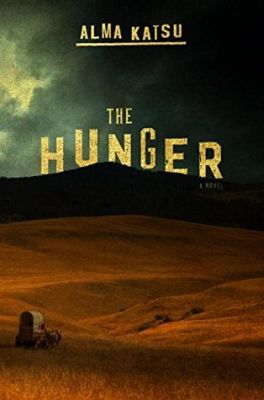
The Hunger

Alma Katsu


G.P. Putnam's Sons 

March 6, 2018

4 & 1/2 stars


For those who never opened their American history textbook in school, The Donner Party was a group of families, a total of about 90 individuals, who were traveling by horse and wagons to California in the years of 1846 and 1847. After a series of misfortune and tragedies, they became trapped in the Sierra Nevada mountains in the winter. Only 45 survived to make it to Sutter Fort. The stories that came from the survivors were those of vast misfortune, fatal decisions and accusations of cannibalism.

Alma Katsu's fictional account of the Donner Party misfortunes comes with another imaginative addition, that of the supernatural. The Hunger is a highly successful mixture of the historical novel and the horror tale. The author for the most part uses the name of the actual persons in the party, adds a few other historical personages like the trapper and scout Jim Bridger, and adds just a few fictional characters. Even though several characters figure in the main narration, the main protagonist is James Stanton, a single man on the trip who has secrets of his own. In a sweeping narration like this it often becomes difficult to keep track of all the characters. I found myself, after a few pages, perusing over the actual history of the Donner Party just to get a better idea of the events. I found that Katsu's account, with a major and obvious exception, was fairly loyal to it. That exception is "The Hunger".

The Hunger is both an historical novel and a fantasy. I imagine this is a difficult thing to do. Katsu uses some back stories to give us an view of the various persons that figure in the telling and to be honest, I do not know how much of their back stories was real, especially for James Reed, Tamsen Donner, and Charles Stanton. These three characters figure strongly in the events to come. The author manages to do an impressive job telling the story in an historical sense but deftly adds a sense of terror as she introduces an element of horror into it. Another historical element that is important is that the Donner Party's misfortunes starts a long time before they reach the Sierra Nevada. The novel begins in Wyoming slightly before they reach Fort Bridger and the tragic events that befall the pioneers starts pretty much at that point both historically and in this fiction.

This is where this review gets tricky. The Donner Story is horrific enough without adding a supernatural element. Much of the novel is based on the complex interactions of the members of the party. Stanton's tenuous relations with the Donners is much at play here as well as his troubled past. James Reed's falling out with the travelers plays a role yet I suspect the reason it does is partly fictional . At some point, the reader must put aside Katsu's deft handling of the historical aspects and realize this is a horror novel. That horror is added subtly while the author immerses the reader into the interactions and tribulations of the party members. Yet that horror finally takes hold of us. This is where Katsu shines. From the beginning I expected the horror to be of a much more traditional nature and I do believe the author intentionally leads us that way. Yet Katsu has her own tricks and we get something different than what we expect. It is a neat trick and one that fits keenly into the characters that we have become involved with.

Throughout the novel, the author plays with our sense of wonder and curiosity. She gives us enough historical background to feel rooted while keeping us informed now and then that we are essentially reading a horror novel. She adds a creative something to an incident that was already pretty horrific. Most interesting to me is that, despite the creative addition of her own imagination, we do get a strong sense of the difficulties that the Donner Party went through and what their own frailties added to their bleak tale. It is sometimes hard to separate the real and the imagined in this novel and I believe that is the strength. We could always read an historical account if we want to know what exactly happened to the Donner Party. But it is a story that even in its historical reality confounds the imagination and makes one wonder how something like this could happen in spite of the many warnings the Donner Party received on the way.. Katsu teases it with a tale of horror that relies on a combination of folk legend and our own human nature and makes it just a little more terrifying and therefore entertaining to the reader that dares to stretch the imagination. There were a few times where the imbalance between historical and fantasy stretches a bit but overall The Hunger becomes a riveting tale of human nature and the fear of the unknown.

Wednesday, February 21, 2018

An unsuccessful mix of miltary tale and vampires

Blood Demons

Richard Jeffries

Lyrical Underground 

March 20, 2018

2 stars


In South Dakota, a couple throw a child with a bomb off the top of Mount Rushmore and destroys the monument. In the middle east, a secret military unit is exploring a tip that might link to the planned destruction of the monument and find signs of a secret group that may be the original source for the legends of vampires.

In a nutshell, this is the idea behind Blood Demons by Richard Jeffries. It is an intriguing one and I was really looking forward to it. The basic plot is inspired and the combination of military adventure and horror is a nice touch. I really wished it took off but it didn't. I think there is a lot of blame to be spread around for this. But if I picked one it would be characterization. No one character ever become real and this is especially true for the main protagonist /unit leader Major Josiah Green. At least one character should stand out for the reader and it just doesn't happen. Add on some stiff and forced dialogue that doesn't always fit the situation and the desire to root for the characters disappears. Jeffries' demons, The Vetala, fares slightly better mainly due to attention regarding their origins and rituals and a link to vampire legends, but it just doesn't meld well especially when the Mount Rushmore attack, one of the best written scenes in the book, is largely forgotten as rather muddled action scenes in Afghanistan takes center stage.

So all in all I found it to be a choppy book. There wasn't really enough to keep my attention even though I struggled through it. I really cant give it more than two stars which I admit are mainly for what the book could have been rather than what it is.

Tuesday, February 13, 2018

From the frying pan....

Broken Shells: A Subterranean Horror Novella

Michael Patrick Hicks


High Fever Books

February 2, 2018

4 stars


First, I want to say I liked the main character Antoine DeWitt immediately from the first page. I am not going to say why for the fear of alienating some of my readers who may not have the same lack of affection for a person, or type of person, as I do.. But it placed me on his side and I stayed there to the ending of this action packed horror novella.

Antoine is fired from his job for doing something that would cause me to hire him. Antoine has not lived an easy life. He has spent two years in jail for what was basically a frame-up and is now jobless with a girl friend and a child struggling in the poor part of the city. When he gets home he has mail from a car dealership that tells him he won five grand. He knows its a scam but his girl friend convinces him to check it out. From that point on, Antoine's life goes from shitty to terrifying.

Broken Shells: A Subterranean Horror Novella is more than a moral tale about "no free lunch". It is a novella that is all terror and action. Antoine finds himself fighting off insect-like demons and wondering whether the life he had was really that bad and realizing how much he has taken for granted. Of course this is in between trying to keep his head from being bit off and chewed. The "Subterranean" in the title tells you this takes place mostly underground but the real villains are above in the car dealership practicing their evil tradition. This is not by any means an unique idea. We've seen it before. But there is something fresh about it and I think it is Antoine himself that gives us that freshness. He is not our usual hero. He had made mistakes before, he is given a chance which turns bad, and we root for him even in the most hopeless situation. He is Everyman trying to do good in the most extreme situation. Think Die Hard with humanoid insects.

Broken Shells is a fast read and always an entertaining one. While it breaks no new ground, it does a lot with old soil. It is a fun read to start off this new year.

Saturday, February 10, 2018

What does your dog really think of you?

Hell Hound

Ken Greenhall


Valancourt Books

March 14, 2017

5 stars


Baxter is a bull terrier. He lives with in a precarious relationship with an elderly woman. Baxter sees the young couple next doors and wonder if that would be a better match for him as he tries to figure out these strange two legged creatures called humans. So one night, he places his body between the woman's legs and the long flight of stairs going down.

Baxter is a sociopath. He loves nothing yet has a curious obsession with humans and what they can teach him and what he can teach them. After a try with the young couple, that ends up for them no better than that of the old lady, he finds what may be a kinship with a young boy who is fascinated by Hitler and has as little capacity for love as Baxter. It is a match that will not bode well for anyone.

Hell Hound was written in 1977 by Ken Greenhall. If you never heard of him, you are not alone. We learn from the excellent introduction by Grady Hendrix that Greenhall wrote only six books before he passed away in 2014, not writing anything for 16 years before that. Hell Hound came out during the flood of horror paperbacks in the 70s and was undeservedly neglected. It is a minor masterpiece and certainly a horror novel ahead of its time. While other books of the 70s delighted in demon children, slashers and a bevy of visceral horrors, Hell Hound is deceptively quiet and vastly disturbing. Its sense of horror is directly related to Greenhall's subtle style. While murder and violence is present in the book, it is more unsettling to hear Baxter's own thoughts as he ponders over those who "own" him.

People have a great capacity for loyalty for those who seem to depend on them. I have benefited from that loyalty but I don't understand it. Urinate on their carpets, chew up one of the objects they endlessly accumulate. They sometimes punish but in their loyalty they always forgive. Does their loyalty have any limits? Some day I'll know. Soon, perhaps.

While most of the novel is in third person narration, there are interspersed passages that are from Baxter's first person...er...dog...viewpoint. And therein lies the brilliance of this tale. We usually view dogs, as least the pet variety, as an extension of their person. Baxter's evilness does not come from nurturing. He is truly evil. In fact, we see that his later ward's control of him doesn't make him meaner or more violent than he already is. Baxter is actually rather philosophical about who he kills and insists on being the one who decides. His equally sociopathic ward focuses him and give an understanding of the evil existing beyond him. The kind he must learn from and conquer.

Despite the stylish subtlety that we don't usually see in a book like this, Hell Hound fits quite well among the horror novels of today. It has a cynical look on love and loyalty all the more disturbing since it is coming from man's best friend. It is certainly different from anything of its nature that I have read before . Comparing it to a contemporary canine of its time, Cujo was a sick doggie. Baxter is an intelligent bundle of terror. Of the two, Baxter is the one that will keep me up at night wondering what my pets really think of me.